Varieties of Bamboo Sound
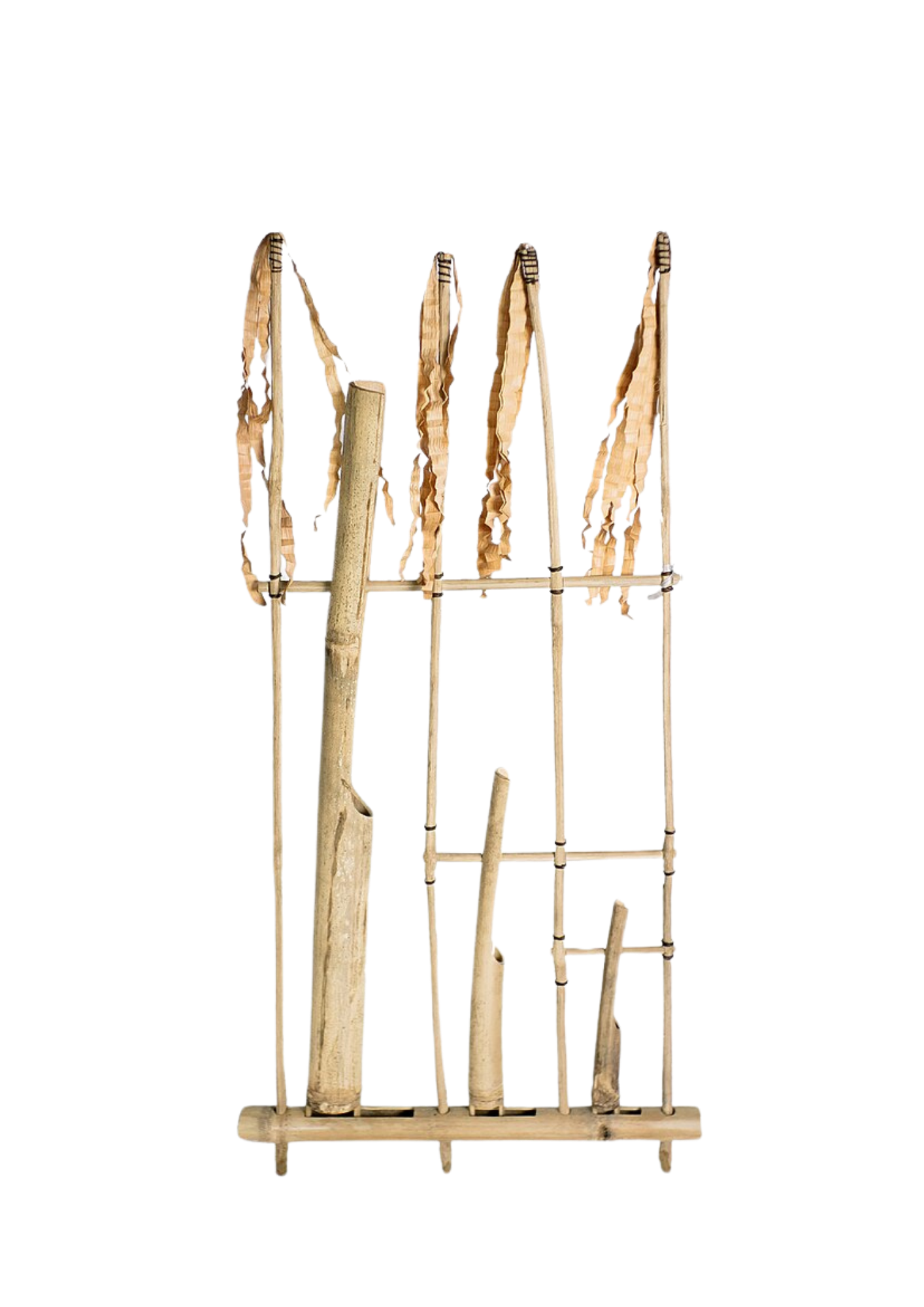
Angklung Kanekes
This sacred angklung of the Baduy people accompanies rice ceremonies as a means of communicating with Nyi Pohaci Sanghyang Sri, the rice goddess. Large in size, with three sound tubes and pelah-leaf ornaments atop its posts, it embodies the three worlds of Sundanese cosmology.
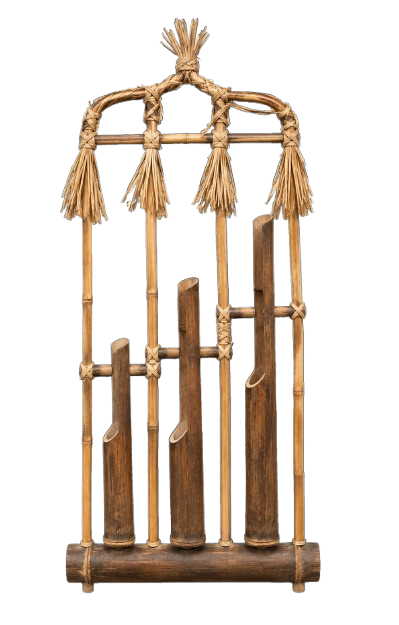
Angklung Gubrag
Its name recalls a crop failure and famine in Cipining, which villagers believed was caused by the anger of Dewi Sri. The angklung was then played in processions around the village to restore the rice's fertility. It is known as the oldest musical instrument in Bogor Regency.

Angklung Buncis
Once played in thanksgiving ceremonies for the rice harvest, angklung buncis is carried in processions around the village. This two-tube angklung later grew into a popular folk entertainment still performed at community events today.
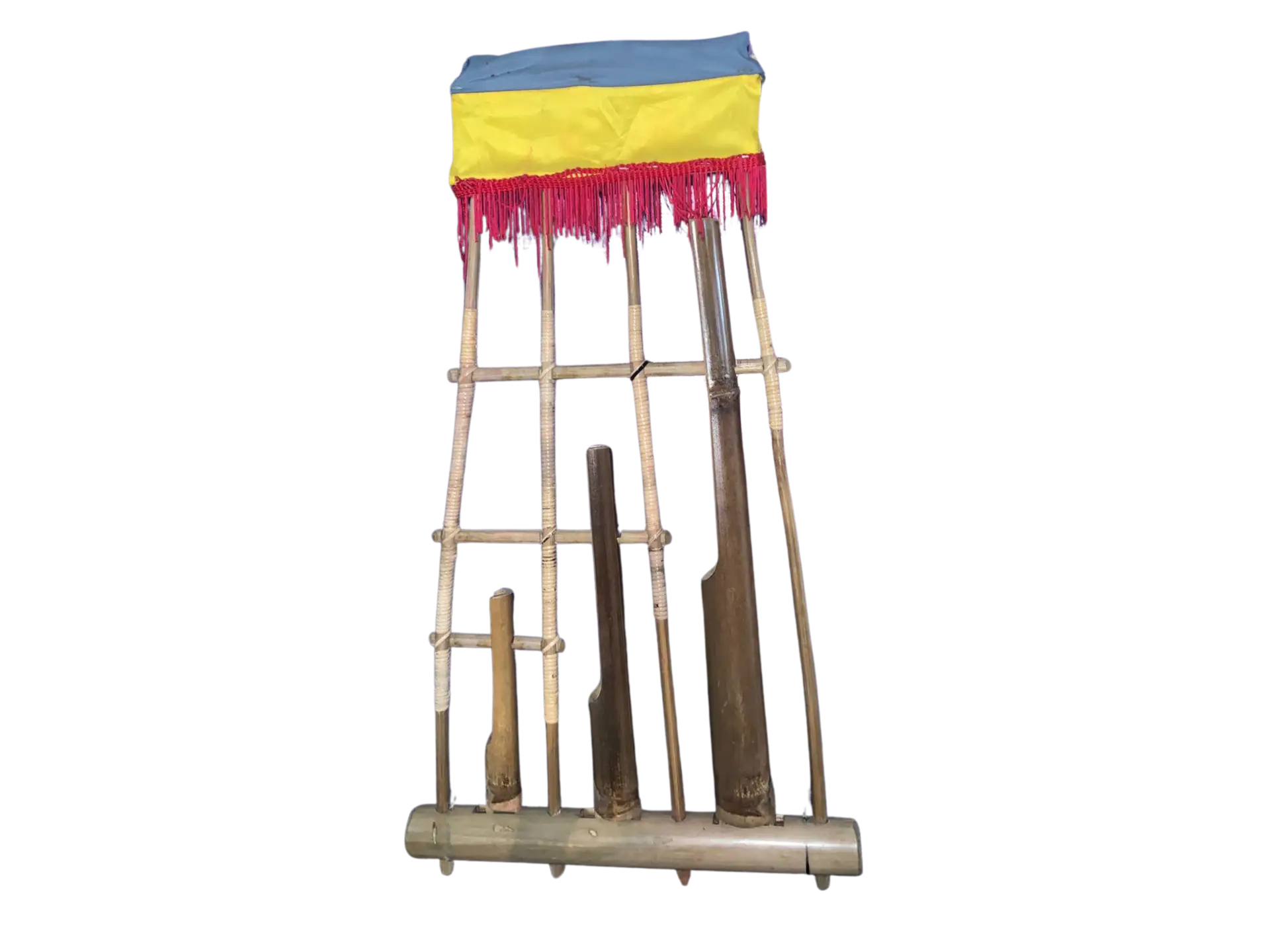
Angklung Badeng
Rooted in rice-planting rituals, angklung badeng later became a medium for spreading Islam through Arabic devotional songs. It is easy to recognise: three sound tubes, a cloth-wrapped frame, and bright ornaments of chicken feathers and woollen yarn.

Angklung Bungko
According to tradition, this angklung was created by Ki Gede Bungko to spread Islam. After his death, the heirloom angklung was no longer played, as it was held to be sacred. Its rhythms live on through the titir and tutukan instruments in the Munjungan ceremony. Its black frame is wrapped in white cloth.
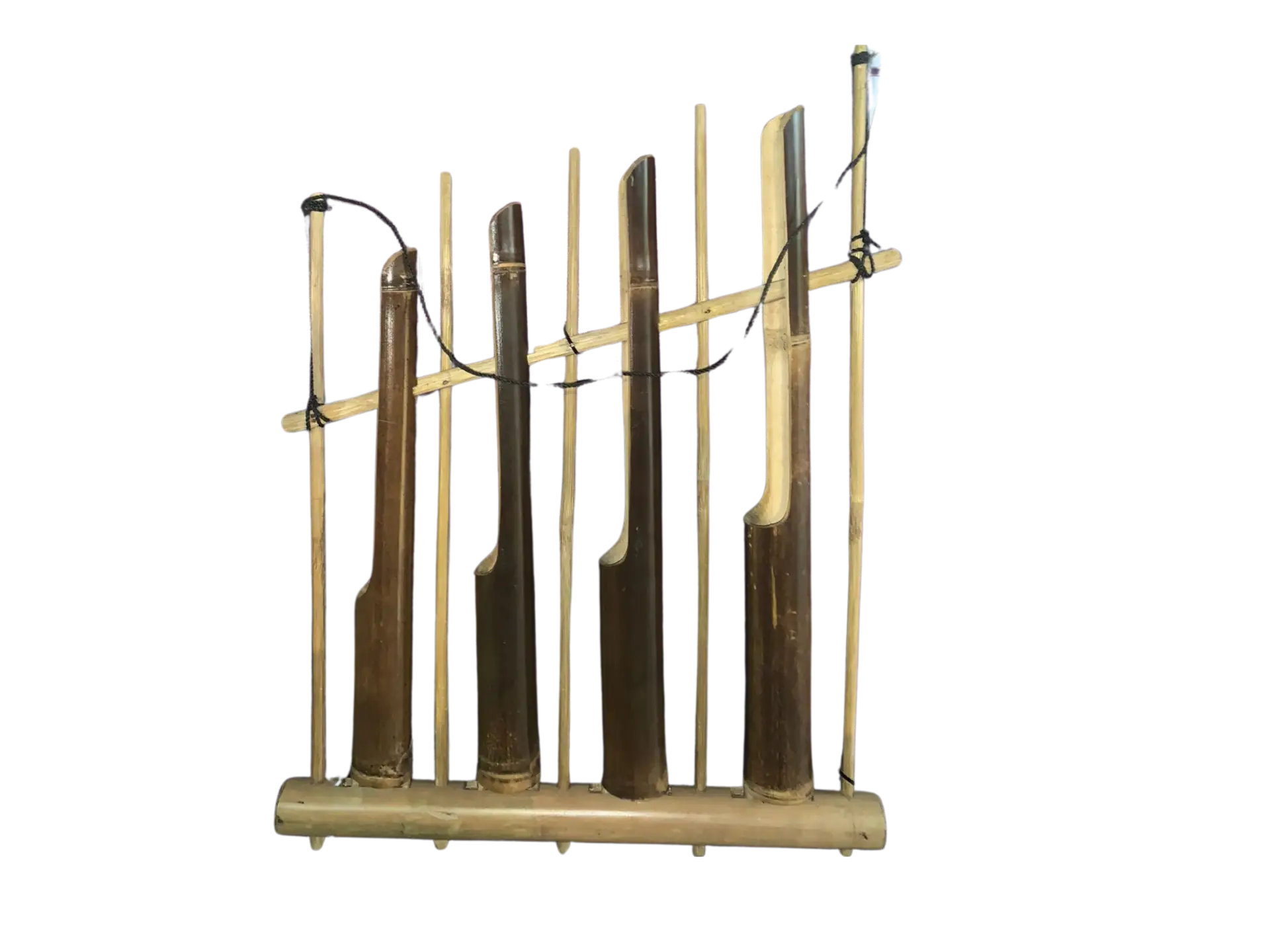
Angklung Gondolio (Bongkel)
This four-tube angklung, tuned to the salendro scale, is played solo by farmers in their spare time. Its sound is believed to drive pests such as wild boar and rats from the fields. Today it is also performed as entertainment.
Angklung Reog
This angklung accompanying Reog Ponorogo has only two tones, klung and klok, and keeps the rhythm of the performance. Its base tube is wide because it is gripped like a pistol, and its posts are topped with red woollen flower ornaments.
